
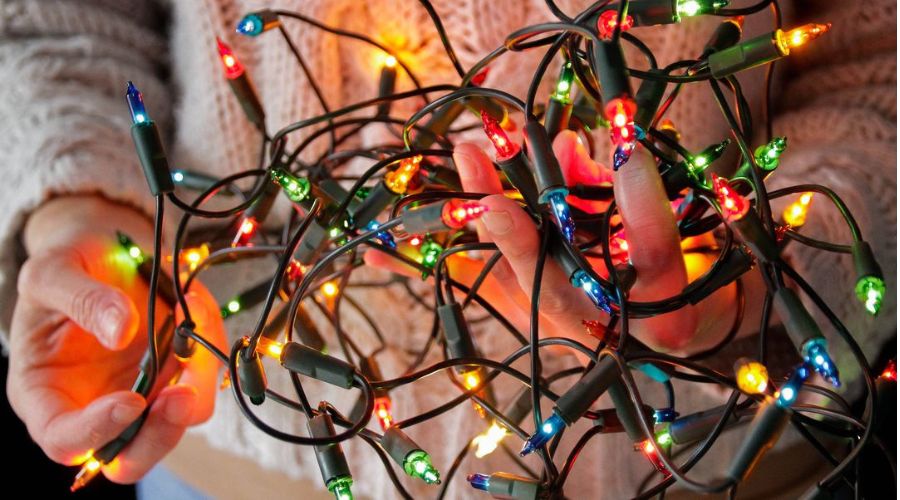
Helpful Tips for Decorating With Holiday Lights
Holiday light safety in San Antonio comes down to three things. Use LED strands rather than incandescent, keep every outdoor connection on a GFCI-protected circuit with a weatherproof cover, and know how much load your circuits can actually carry. Most holiday electrical failures trace back to one of those three.
The season has a way of arriving faster than anyone plans for. Plenty of homeowners start hanging lights well before the shopping and baking take over the calendar, which is a smart move. Working ahead means the job gets done in daylight, in good weather, and without the rush that leads to shortcuts.
The part that gets less attention is the electrical side. A holiday display is a temporary electrical installation running for six weeks straight, often outdoors, often plugged into circuits that were never designed with it in mind. Our licensed San Antonio electricians get calls every December from homeowners who found out the hard way, and the causes are consistent enough to plan around.
Should You Choose Incandescent or LED Holiday Lights
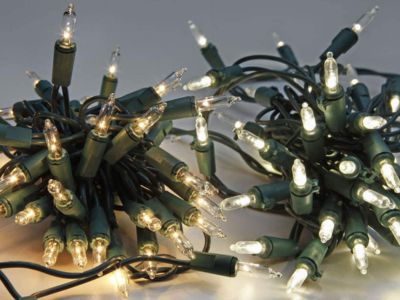
If you are replacing strands this year, this is the easiest decision on the list.
Incandescent lights cost less upfront and produce the warm glow some people prefer. The drawbacks are real. They draw substantially more power per strand, they burn out faster, and they generate meaningful heat at the bulb. That heat is why manufacturers limit how many incandescent strands can be connected end to end, typically no more than three, and why they should never sit against dry landscaping or fabric.
LED lights cost more per box and win on nearly every other measure. They use a fraction of the energy, last dramatically longer, and run cool to the touch. The lower draw also means far more strands can safely share a single circuit and connect in series, which matters enormously on a large display.
Over a few seasons, the energy savings and the strands you do not have to replace close the price gap. The reduced fire risk is the part that actually matters.
How Many Strands of Lights Can One Circuit Handle
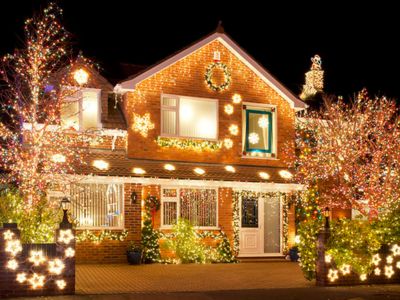
This is the question almost nobody asks and the one behind most holiday breaker trips.
A standard 15-amp household circuit delivers 1,800 watts at capacity. For anything running continuously, which a holiday display absolutely is, the working limit is 80 percent of that, or roughly 1,440 watts. That circuit is also probably feeding other things already, so the available headroom is less than the full number.
Here is why the light type matters so much. A single strand of larger incandescent bulbs can draw well over 100 watts. An equivalent LED strand often draws a small fraction of that. The practical result is that a display which would overwhelm a circuit in incandescent form fits comfortably in LED.
Two rules worth following:
- Respect the manufacturer’s connection limit. Every box states how many strands can be connected end to end. That number exists because the wire gauge in the strand can only carry so much current, and exceeding it heats the conductor inside the insulation.
- Spread the load across circuits. Running the entire display off one exterior outlet is the most common cause of a December service call. Distributing across separate circuits keeps each one well within its limit.
If your breakers trip once the display goes up, that is not a nuisance to work around by resetting it each evening. It is the circuit reporting that it is carrying more than it should.
Options When Creating a Holiday Display
Homeowners have more to work with than they did a decade ago, and combining types is what makes a display look intentional rather than assembled.
- String lights. The versatile standard, used on trees indoors and along rooflines and balconies outdoors. Confirm any strand used outside is rated for it.
- Net lighting. Drapes over bushes and shrubs for even coverage without wrapping anything by hand.
- Tree wrap lights. Similar concept applied to trunks and larger branches, which is a nice fit for the mature live oaks common across older San Antonio neighborhoods.
- Icicle lights. Hung from eaves and rooflines for the classic dripping effect.
- Holiday inflatables. Large yard figures with integrated blowers, which draw more power than people expect and need their own consideration in the load plan.
- Projector lights. Cast festive images onto a facade or garage door using a single low-draw unit, which makes them the easiest option on a limited circuit.
Whatever the mix, everything outdoors needs to be rated for outdoor use and carry a certification label from a recognized testing laboratory. Indoor-rated products used outside are a genuine hazard, not a technicality.
Make Electrical Safety a Priority
Holiday electrical incidents cluster around a few predictable causes. Fire or shock from damaged cords and strands, moisture reaching connections that were not made for it, and circuits carrying more than they were built to handle.
What we recommend to customers every year:
- Inspect before you plug in. Cracked insulation, frayed cords, exposed conductors, and damaged sockets mean the strand goes in the trash, not on the house. Storage conditions in a San Antonio attic are hard on wiring, and a strand that worked last January may not be sound now.
- Keep every outdoor connection GFCI protected. Ground fault protection is what interrupts the circuit when current finds a path it should not take, and it is required for exterior receptacles. Test the outlet before the season starts.
- Cover outdoor connections properly. Weatherproof in-use covers keep moisture out of receptacles while a cord is plugged in. A cord plugged into an uncovered exterior outlet through a week of rain is asking for a fault.
- Never staple or nail through a cord. Use insulated hangers and clips designed for the purpose. A staple through insulation is a fault waiting for humidity.
- Keep decorations clear of heat sources. Indoors that means fireplaces and space heaters. Outdoors it means grills and any exterior equipment that runs warm.
- Put the display on a timer. Fewer run hours means less heat, less wear, and a lower bill. It also handles the last item on this list automatically.
- Turn everything off overnight and when the house is empty. This is the single easiest risk reduction available and the one most often skipped.
Anything that feels warm to the touch, smells like hot plastic, or trips a breaker or GFCI repeatedly needs to come out of service. Those are the same warning signs that prompt an electrical repair call any other time of year, and the holidays do not make them less serious.
When the House Is the Limiting Factor
Sometimes the display is not the problem. The house is.
Many older homes across San Antonio were built with one exterior receptacle, or none at all, and no consideration for seasonal load. That leads to the workarounds we see every December, including extension cords run through door jambs and window gaps, daisy-chained power strips, and a single outlet feeding an entire yard.
The better fix is usually straightforward electrical work handled during the off season:
- Adding properly placed exterior receptacles with GFCI protection and in-use covers
- Installing a dedicated circuit for seasonal displays on larger properties
- Adding switched or timer-controlled exterior outlets so the display is not managed by hand
- Evaluating panel capacity where the service is already running near its limit
That last one comes up more often than homeowners expect. If holiday lights are the thing that finally exposes a capacity problem, an electrical panel upgrade or replacement assessment is worth having before the next season rather than during it. The same is true for any general electrician work you have been putting off, since scheduling in the fall is considerably easier than in the middle of December.
Frequently Asked Questions About Holiday Lighting Safety
Can I use indoor Christmas lights outside if it does not rain much?
No. Outdoor-rated strands use different insulation and sealed sockets built to handle moisture, dew, and temperature swings. San Antonio gets enough overnight humidity and sudden cold fronts to find the weakness in an indoor-rated strand, and the failure mode is a short or a ground fault at an outdoor connection.
Why does my GFCI outlet keep tripping when the lights are on?
A repeatedly tripping GFCI is usually detecting real current leakage, often from moisture inside a connection or a damaged strand. It is doing its job. Resetting it over and over without finding the cause defeats the protection, so the right move is to isolate which strand or connection triggers it.
Are LED holiday lights actually cheaper over time?
For most displays, yes. The energy draw per strand is a fraction of incandescent, and the lifespan is far longer, so the savings come from both the utility bill and the strands you do not replace. The larger the display and the longer it runs each night, the faster the difference adds up.
Is it safe to leave holiday lights on all night?
It is not the practice we recommend. Continuous operation adds heat and wear, and no one is present to notice a problem developing. A timer set to shut the display down at a reasonable hour removes the risk without anyone having to remember.
How early is too early to put up holiday lights?
Electrically speaking, earlier is fine and often safer, since the work happens in better weather and without time pressure. What matters more is having any needed outlet or circuit work done before the strands go up, because retrofitting a display around an electrical fix is far more work than sequencing it correctly.
Keeping the Season Bright and Safe in San Antonio
A holiday display is one of the better traditions there is, and none of the above is a reason to scale yours back. It is a reason to plan the electrical side with the same care you give the design. Choose LED, spread the load, protect every outdoor connection, and address the outlet or panel limitations before they turn into a December problem.
Hunter Service Group is a family-owned and operated heating, air conditioning, and electrical company serving San Antonio and the surrounding areas since 2015. We communicate clearly, we explain what we find, and we stand behind our work with a satisfaction guarantee.
If your home could use additional exterior outlets, GFCI protection, or an honest look at your panel before the season starts, contact our team today to schedule a visit.