
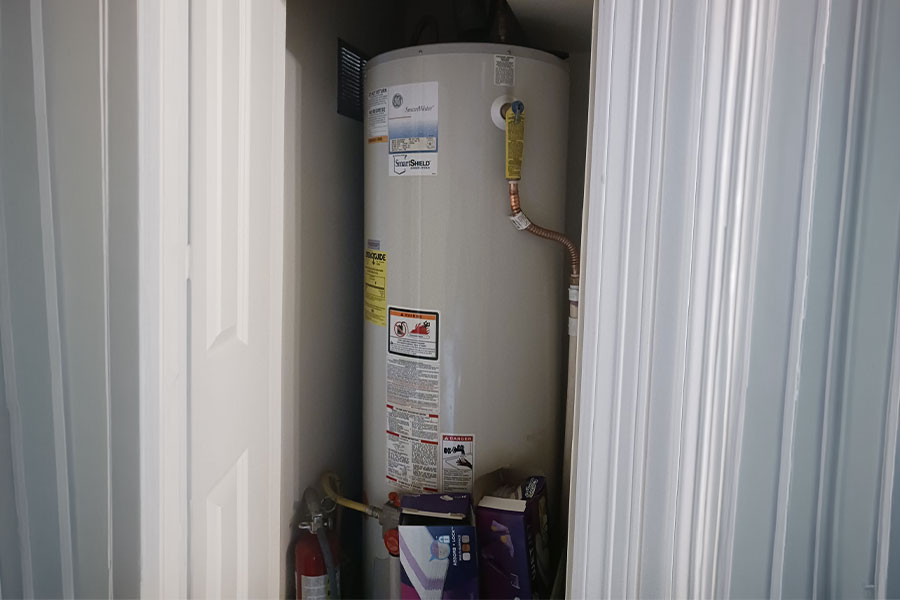
Choosing the right water heater for your Kerrville home is a decision that affects daily comfort, monthly energy costs, and long-term maintenance demands. The Hill Country’s hard water, the region’s temperature swings between summer heat and winter cold snaps, and the range of home sizes throughout the Kerrville area all factor into which type of system makes the most sense for a given household.
This breakdown covers what separates tankless and traditional water heaters across the categories that matter most: performance, cost, energy efficiency, and longevity. If you are evaluating a replacement or planning for a new installation, this is what a qualified technician would want you to understand before making that decision.
Why Kerrville Homeowners Choose Tankless Water Heaters
A tankless water heater heats water on demand rather than storing a preheated supply in a tank. When a hot water tap is opened, cold water travels through the unit, is heated by a gas burner or electric element, and delivered immediately. When the tap is closed, heating stops.
This design has several meaningful advantages for Kerrville homes:
- Continuous hot water supply. Because the system heats water as it flows rather than drawing from a stored reserve, it does not run out. For households with back-to-back showers, simultaneous laundry and dishwasher cycles, or high peak-hour demand, this is a genuine quality-of-life improvement.
- Energy efficiency. Traditional water heaters maintain a stored tank of hot water around the clock, even when no one is using it. That constant reheating to compensate for heat loss is called standby loss, and it adds up across a full year of utility bills. A tankless system eliminates standby loss entirely, consuming energy only when hot water is actively being used.
- Extended lifespan. Properly maintained tankless units typically last 20 years or more, compared to 10 to 15 years for a conventional tank heater. Over the life of a home, that difference in replacement frequency is worth factoring into the total cost calculation.
- Space savings. Tankless units are compact and wall-mounted. For Kerrville homes where utility space is limited, or where a tank heater is consuming valuable square footage, the size difference is a practical benefit.
One important consideration for the Kerrville area specifically: the Hill Country is known for hard water with elevated mineral content. Tankless systems require periodic descaling to prevent calcium and magnesium buildup inside the heat exchanger. In areas with particularly hard water, annual descaling is worth building into the maintenance schedule.
The Case for Traditional Water Heaters
Conventional tank water heaters store and maintain a supply of heated water, typically between 30 and 80 gallons, ready for use at any time. They remain the most common residential water heating solution and continue to be the right choice for many households.
- Lower upfront cost. Traditional water heaters carry a significantly lower purchase price than tankless units, and their installation is generally less complex. For homeowners working within a tighter budget or planning to sell a property in the near term, this cost difference matters.
- Simpler technology. Tank heaters have been a standard fixture in American homes for decades. Parts are widely available, most plumbers are highly familiar with them, and diagnostic and repair work is typically straightforward.
- Consistent performance for steady-use households. In homes where hot water demand is relatively even throughout the day rather than concentrated in peak periods, a well-sized tank heater performs reliably without the higher upfront investment of a tankless system.
- Easier installation in existing homes. Retrofitting a home from a tank to a tankless system sometimes requires gas line upgrades, new venting configurations, or electrical panel modifications. For homes where those upgrades would add significantly to the project cost, staying with a tank unit may be the more practical near-term choice.
Cost Comparison: What to Budget For
Understanding the full cost picture, not just the sticker price, leads to a more accurate comparison.
Upfront costs:
- Traditional tank water heaters typically range from $300 to $1,500 for the unit itself, with relatively straightforward installation in most cases
- Tankless units generally range from $1,000 to $3,000 for the unit, with installation costs that vary depending on whether gas lines, venting, or electrical capacity require upgrades
Long-term operating costs:
- Tankless systems consume energy only on demand, which can meaningfully reduce monthly utility bills for households with significant hot water use
- Tank heaters incur standby energy loss continuously, which adds to annual operating costs regardless of usage patterns
Replacement frequency:
- A tankless unit lasting 20-plus years versus a tank unit lasting 10 to 15 years means one fewer full replacement cycle over the life of a home, which partially offsets the higher initial investment
The break-even point where a tankless system’s energy savings recover the higher upfront cost varies by household usage and local utility rates. A professional assessment of your specific situation provides a more accurate projection than general estimates.
Energy Efficiency: How the Two Systems Compare
Energy efficiency is where tankless systems hold their clearest advantage. Because they do not maintain a standing reserve of heated water, they avoid the continuous energy draw that conventional tank heaters require. For a household that uses hot water heavily, this translates to a noticeable reduction in monthly energy costs over time.
That said, the efficiency advantage is most pronounced in households with moderate or variable hot water demand. In homes where hot water is being used almost continuously throughout the day, the gap between tankless and tank efficiency narrows somewhat, since the tankless unit is running nearly continuously as well.
One factor that affects efficiency in the Kerrville area is water hardness. Mineral buildup inside a tankless heat exchanger reduces efficiency over time if the unit is not descaled regularly. Pairing a tankless water heater with a water softener installation is a combination that protects equipment performance and extends service life in hard water regions.
Maintenance and Longevity
Both system types require maintenance, though the nature of that maintenance differs.
Tankless water heaters benefit from annual descaling to remove mineral deposits from the heat exchanger, particularly in hard water areas like Kerrville. Filter screens at the inlet should be checked and cleaned periodically. When professionally maintained, these units routinely reach 20 years of reliable service.
Traditional tank water heaters benefit from an annual flush to remove sediment that accumulates at the bottom of the tank over time. Sediment buildup reduces efficiency and accelerates tank corrosion. The anode rod, which protects the tank interior from corrosion, should be inspected and replaced on a regular schedule. Even with consistent maintenance, most tank units reach the end of their service life between 10 and 15 years.
When a traditional tank heater does fail, it often does so with little warning, and a tank failure can result in significant water damage. Tankless systems are more likely to show declining performance before complete failure, giving homeowners more notice to plan a replacement.
Signs It May Be Time to Replace Your Current Water Heater
In our service calls throughout Kerrville and the surrounding Hill Country communities, there are consistent indicators that a water heater is nearing the end of its useful life:
- Age: A tank unit older than 12 years or a tankless unit older than 18 years warrants a professional evaluation
- Rust-colored water from hot taps, which indicates internal tank corrosion
- Rumbling or popping sounds during heating cycles, typically caused by sediment buildup
- Inconsistent water temperature or noticeably reduced hot water capacity
- Visible corrosion, moisture, or pooling around the unit or its connections
- Increasing frequency of repairs, which often signals a system approaching end of life
If your current system is showing any of these signs, a water heater replacement and installation consultation can help you understand your options and make a cost-effective decision.
Making the Right Choice for Your Kerrville Home
There is no single answer that fits every household. The right water heater depends on your family’s hot water usage patterns, your home’s existing infrastructure, your budget for upfront versus long-term costs, and how long you plan to stay in the home.
What serves most Kerrville homeowners well is a straightforward, honest conversation with a licensed plumber who can evaluate your specific situation, review your current system, and give you a clear recommendation based on facts rather than sales pressure.
Hunter Service Group has been serving Kerrville and the broader Hill Country region since 2015. As a family-owned and operated company, we bring the same standard to every plumbing call: honest assessments, transparent pricing, and work done right. We will never recommend a replacement you do not need, and we will give you a clear explanation of whatever we find.
When you are ready to explore your water heater options, contact our team today to schedule a consultation with one of our licensed plumbers.