
Helotes lives in two worlds at once. Old Town keeps its dance hall roots and ranching history along Bandera Road, while neighborhoods like Iron Horse Canyon and Sonoma Ranch climb the edge of the Balcones Escarpment with some of the fastest home growth in northwest Bexar County. That escarpment position matters for more than views. Storms rolling off the Hill Country hit this corridor hard, with hail and wind that outdoor HVAC equipment absorbs season after season.
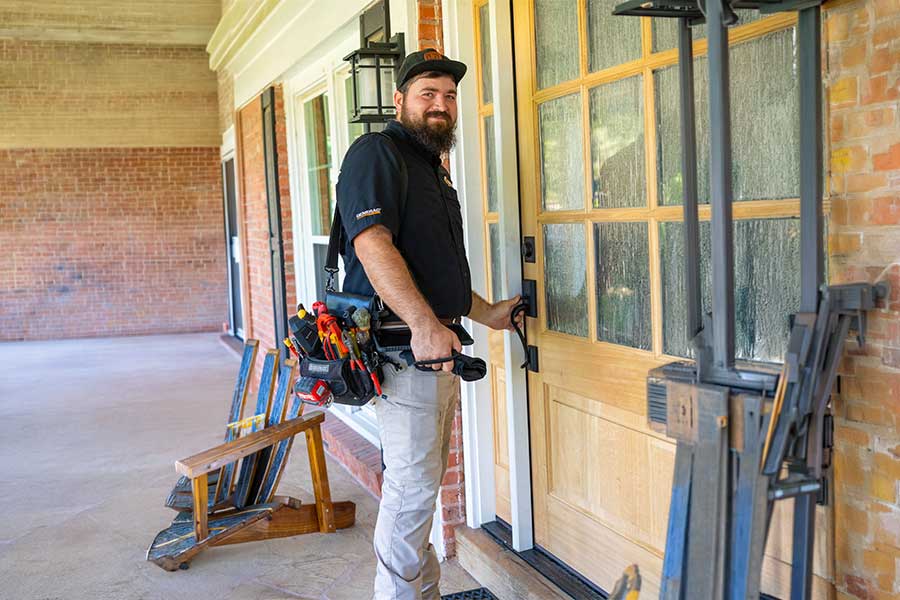
Hunter Service Group has served Helotes since 2015 as a family-owned company. From ranch properties off Scenic Loop to two-story homes in the newest sections, we keep this community comfortable.
Northwest San Antonio sits in one of the most hail-prone corridors in the country, and Helotes catches more than its share. Dented condenser fins, damaged fan blades, and electrical issues after storms are regular repair calls here, alongside the usual summer wear.
Get in touch when you see any of the following.
After major weather events we prioritize storm-related calls, and we will give you an honest read on whether damage needs repair or just monitoring.
Building on the escarpment means Helotes homes deal with rocky, sloped lots and dramatic western sun exposure. Second stories in the newer subdivisions bake through summer afternoons, and many builder-installed systems were sized for the sale price rather than the sun load. When those systems age out, replacement is a chance to fix comfort problems the home has had since day one.
We run full load calculations that account for slope orientation, window exposure, and attic conditions. For two-story homes with chronic upstairs heat, we evaluate zoning, damper systems, and duct improvements alongside the new equipment. And on rocky lots where placement options are limited, we position condensers for airflow, drainage, and a measure of protection from wind-driven hail.
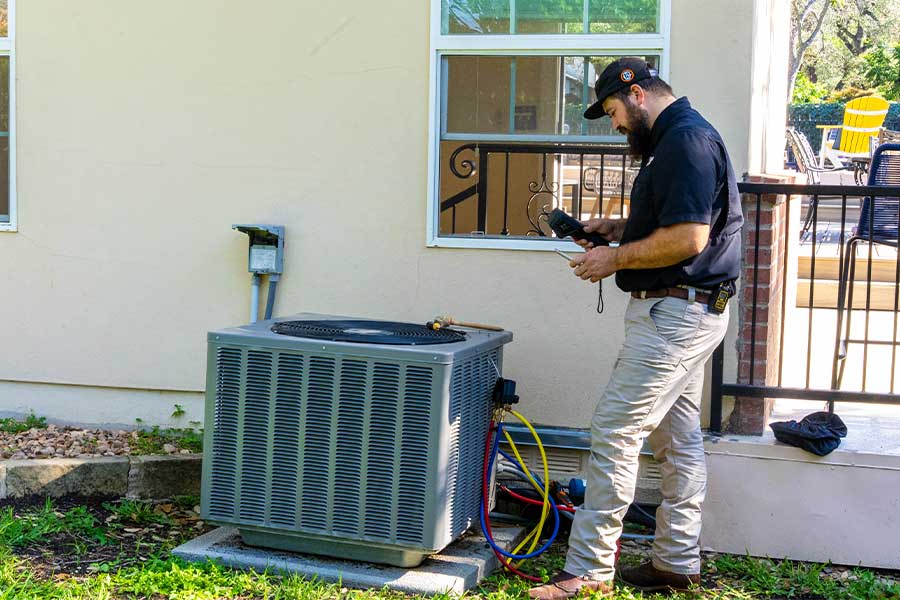
Helotes weather swings from spring hailstorms to triple-digit summers to the occasional hard freeze funneling down the escarpment. Each season leaves its mark on HVAC equipment, and maintenance is how you catch that damage before it compounds. A hail-dinged coil might run fine in May and fail under July load.
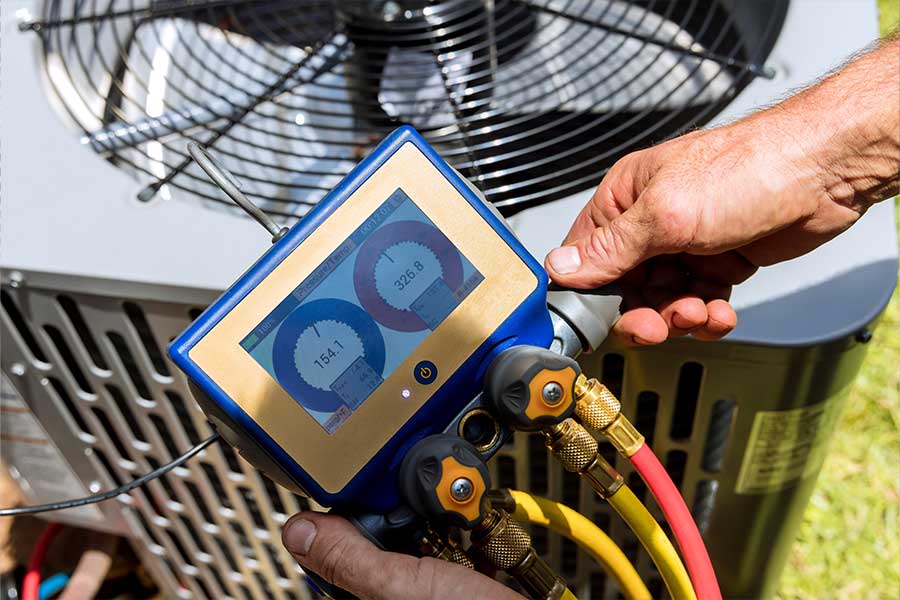
Our tune-ups include combing and cleaning condenser coils, checking refrigerant charge, testing capacitors and contactors that storm surges weaken, flushing drains, and inspecting ductwork. Spring visits catch winter and hail damage before cooling season. Fall visits ready your heating for those sudden northers. Twice a year keeps a Helotes system honest.
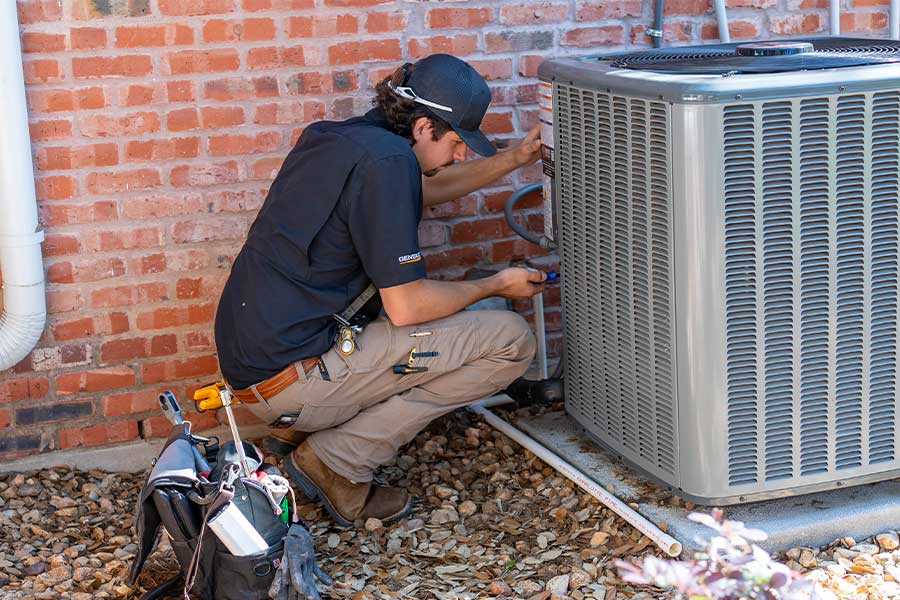
After a hailstorm last April, a homeowner named Marcus in Iron Horse Canyon noticed his outdoor unit rattling and his cooling fading. Two days later the system quit entirely on an 88 degree afternoon. Our technician arrived that evening, set out his rugs, and inspected the unit under a flashlight.
Hail had bent a fan blade just enough to wobble the motor loose, and the strain had taken out the capacitor. He replaced both, straightened the damaged coil fins, and had cold air running before dark. Marcus asked what the storm damage meant long term, and our tech walked him through it honestly, no scare tactics, no oversized quote. Just the fix he needed.
From Old Town to the newest streets on the hill, here is what we bring.
We are neighbors serving neighbors, and we plan to keep it that way.
Yes. Hail bends coil fins, dents cabinets, and can damage fan blades. Some damage is cosmetic, some reduces efficiency or causes failures. An inspection tells you which.
After significant hail or a power surge, yes. Early inspection catches damage before summer heat turns it into a breakdown.
Western sun exposure on the escarpment, attic heat, and single-system designs all contribute. Duct improvements, zoning, or added returns usually solve it.
They can weaken capacitors, control boards, and motors even when the system restarts fine. Surge protection and post-storm checks limit the risk.
We serve all of Helotes, from ranch properties and older homes near Old Town to the newest neighborhoods along the escarpment.