


Shavano Park has held onto something rare inside Loop 1604, real space. Half-acre and larger lots shaded by protected oak canopy, custom homes built mostly from the 1970s through the 2000s, and a city that guards its wooded character carefully. Those decades of construction mean the community’s HVAC equipment now spans every stage of life, from original systems overdue for retirement to recent replacements needing their first professional attention.
Hunter Service Group serves Shavano Park with the thoroughness these properties call for. Family-owned since 2015, we match careful workmanship to a community that has always chosen quality over speed.
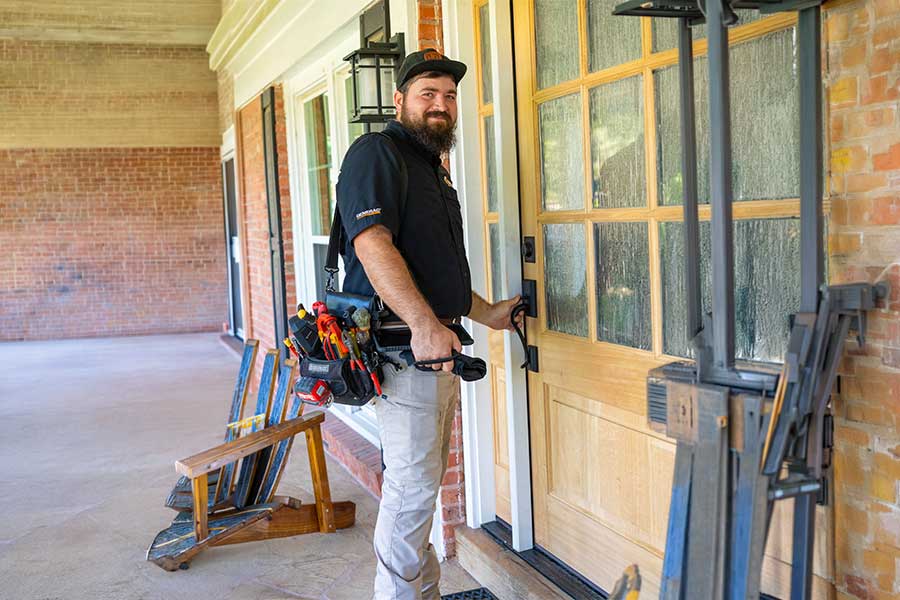
A 1978 custom home and a 2005 custom home fail in completely different ways, and Shavano Park has plenty of both. Our technicians read each home’s era, its equipment generation, and its repair history before touching a gauge, which is how we find causes instead of symptoms.
Watch for these signs across any vintage of home.
Whatever era your home comes from, we give you a straight answer about what it needs now and what is coming later.
Tree preservation shapes construction in Shavano Park, and it shapes HVAC replacement too. The mature oak canopy shading these lots meaningfully reduces cooling loads, sometimes allowing smaller equipment than square footage alone would dictate, and we credit that shade properly in every load calculation rather than defaulting to oversized units.
Sprawling single-story floor plans common here create long duct runs that we evaluate and often improve during replacement, because new equipment on tired distribution never performs to its rating. For larger homes running two or three systems, we plan changeouts so the whole house ages on a sensible schedule instead of lurching from one emergency to the next. Placement decisions respect root zones and the landscape investment surrounding every home.
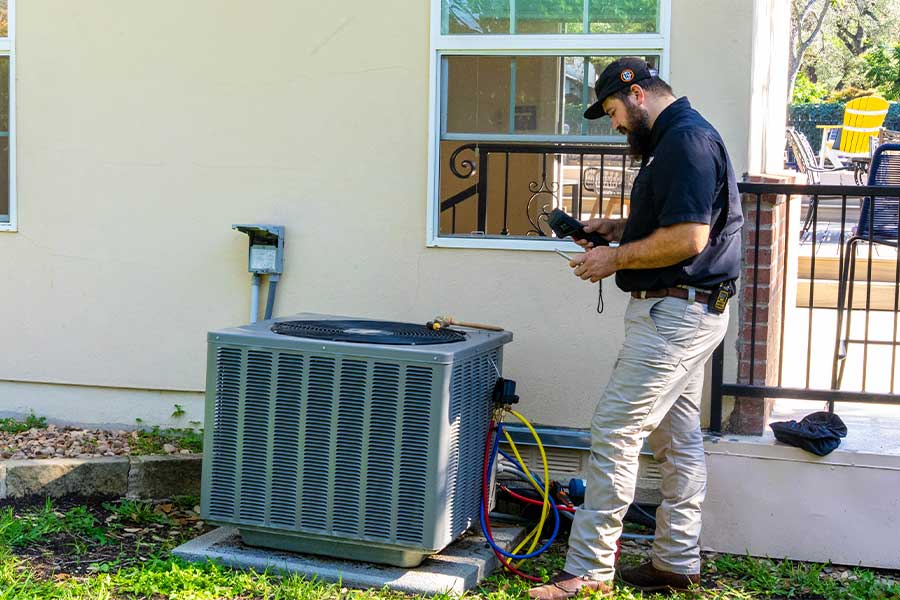
The canopy that keeps Shavano Park cool also keeps its outdoor units busy. Oak catkins in spring mat across condenser coils like felt, acorns and leaf litter collect against cabinets through fall, and shaded, slower-drying conditions encourage corrosion and algae in drain lines. Equipment here needs cleaning more often than units on open suburban lots.
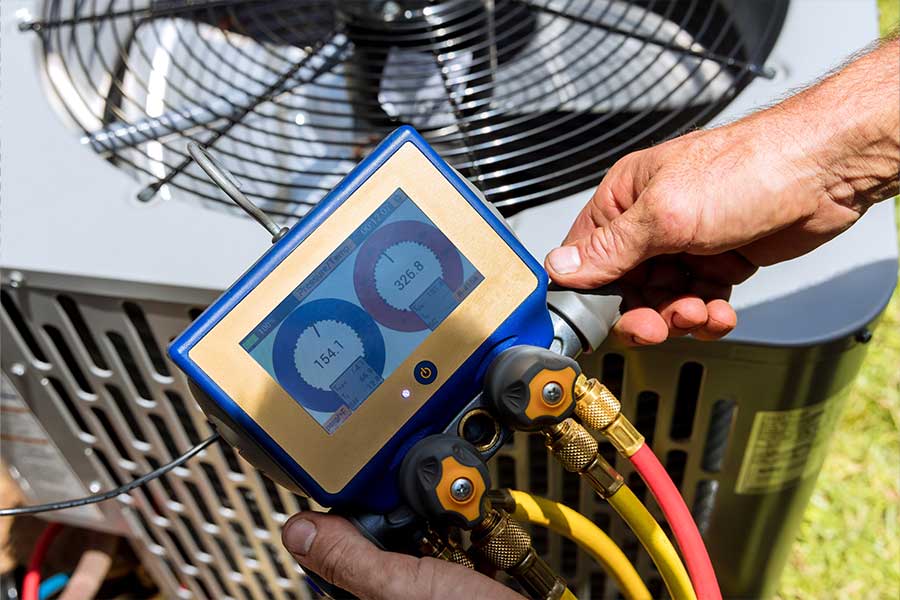
Our maintenance visits wash coils thoroughly, clear debris, flush and treat condensate drains, verify refrigerant charge, and test the electrical components that long cooling seasons wear down. For homes with multiple systems, we service them together and keep records that let you compare each system’s health year over year. It is methodical work, and it is why our clients’ equipment routinely outlasts the neighborhood average.

Last June, a homeowner named Patricia on Bent Oak called about a master wing that had grown steadily warmer over two weeks. Her home, built in the early 1980s, runs two systems, and the one serving the back of the house was struggling. Our technician set out his rugs, inspected the equipment, and found the condenser coil buried under a thick mat of oak catkins from the towering trees over her patio.
He washed the coil clean, confirmed refrigerant charge, and tested the capacitor, which was reading weak and got replaced on the spot. The wing cooled evenly by afternoon. Patricia signed both systems up for spring and fall maintenance, and under those oaks, that schedule will pay for itself many times over.
Quality-minded homeowners expect thorough work, and that is our standard.
We do the job right the first time, every time.
Yes. Mature shade reduces heat load meaningfully, and we credit it in load calculations. The tradeoff is debris on outdoor units, which maintenance handles.
We assess each system’s condition and help you stage replacements sensibly, spreading investment over time instead of facing simultaneous failures.
Oak catkins, acorns, and leaf litter accumulate quickly under heavy canopy, restricting airflow. More frequent cleaning keeps efficiency and lifespan up.
No. We plan equipment placement and access routes around root zones and plantings, treating your landscape as carefully as your home.
Usually, yes, though ductwork and electrical capacity need evaluation first. We inspect both before recommending equipment so performance matches the rating.