
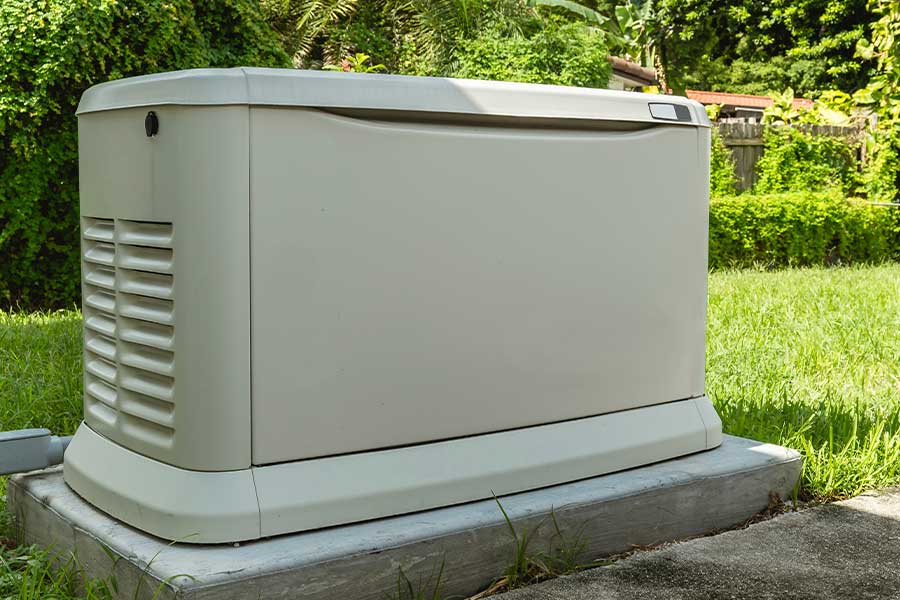
Generator installation in Boerne, TX depends on four decisions made before any equipment is ordered. Correct sizing for your actual household load, a fuel source that matches what is available at the property, placement that satisfies clearance and code requirements, and permits pulled with the city. Get those right and the rest follows.
Boerne sits squarely in the path of some of Texas’s most unpredictable weather. Hill Country thunderstorms can knock out power along Highway 46 with little warning, and winter ice events have a history of taking down lines for days at a time. For homeowners here, a whole-home generator is not an indulgence. It is a practical investment in family safety and home resilience.
This guide covers what matters most before the project starts, from sizing and fuel selection through installation and long-term maintenance.
Why Boerne Homeowners Invest in Whole-Home Generators
Outages in the Boerne area come from a range of causes. Summer thunderstorms moving up from the south, ice accumulation on transmission lines during winter events, high winds bringing limbs down on rural feeders, and the occasional wildfire-related grid disruption all add up to an outage risk higher than most homeowners expect. When the power goes out, the consequences run well past inconvenience.
A whole-home standby generator keeps essential systems running automatically:
- Refrigeration. Refrigerators and freezers stay on, protecting hundreds of dollars in food during outages that stretch past a few hours.
- Heating and cooling. HVAC equipment keeps running, which matters enormously during a July heat wave or a February freeze.
- Health and safety equipment. Medical devices, sump pumps, well pumps, security systems, and lighting stay functional throughout the event.
- Clean restoration. When the utility brings power back, the transfer switch manages the handoff, which protects electronics and appliances from the voltage irregularities that often accompany grid restoration.
Our licensed Boerne electricians see the difference clearly in the days after a major event. Homes with standby power carry on. Homes without it spend the week managing spoiled food, hotel bills, and appliances that did not survive the restoration surge. In established neighborhoods and on Hill Country properties where outages can linger, that reliability is what the investment buys.
What Should You Consider Before a Generator Installation
Every project is shaped by site-specific factors. Working through these before equipment is purchased leads to a better outcome and far fewer surprises.
Home power requirements. The first step is understanding how much power your household actually draws during an outage. An undersized generator struggles under load and fails early. An oversized one costs more to buy, install, and fuel than the house will ever need. Most residential air-cooled units fall in a capacity range measured in kilowatts, with larger homes and heavier loads moving up to liquid-cooled models. A qualified technician evaluates your electrical panel, identifies which circuits and appliances need backup coverage, and recommends capacity based on real numbers rather than square footage alone. Load management modules can also shed large intermittent loads for a moment so a right-sized unit covers the whole house without jumping a size class.
Installation location. Standby units must be positioned in compliance with both manufacturer specifications and local code. That means a level, stable pad, adequate clearance on all sides for airflow and service access, and separation from windows, doors, and vents so exhaust cannot enter the home. Setback distances from property lines and structures factor in as well. On Boerne properties with sloped terrain, mature oak cover, or restrictive lot lines, siting takes real planning rather than a quick look at the side yard.
Local permits and code compliance. Generator installation in Boerne requires permits, and the work has to meet local building, electrical, and gas codes. A licensed contractor handles that as a matter of course. Skipping the permit process creates liability exposure for the homeowner and tends to surface later as a complication during a property sale or an insurance claim.
Fuel source. Standby units run on natural gas or propane. Natural gas provides continuous supply through the utility line with no tank to monitor, though the meter and line have to deliver enough volume to feed the generator alongside existing gas appliances. Propane is the strong option for properties without a gas line, with tank size determining runtime. Many Hill Country properties outside city gas service fall into this category, and tank sizing should reflect how long you want to run before a refill.
Noise and neighbors. Modern units run quieter than most homeowners expect, but they are not silent, and the weekly exercise cycle happens whether you are home or not. Placement relative to bedroom windows, patios, and adjacent properties is worth considering during planning rather than after the pad is poured.
Project timeline. Between the site assessment, permitting, pad cure time, gas coordination, and inspection, a generator project takes longer than a single service call. Demand also spikes immediately after major weather events. Starting the conversation during a calm stretch is the easiest way to avoid waiting through the season you wanted coverage for.
Understanding the Generac Standby Generator
Hunter Service Group exclusively installs Generac standby generators. As a highest rated Generac dealer, we work with one brand because we believe in standing behind what we install, and Generac is the standard for residential standby power in this market.
Generac units are permanently installed outside the home and connected directly to the electrical panel and fuel supply. They operate on their own. When grid power drops, the generator detects it, starts within seconds, and restores power without anyone lifting a finger. When utility power returns and stabilizes, the unit transfers the load back to the grid and shuts itself down.
That automatic operation is what separates a standby system from a portable one. Portable units require manual setup, extension cords, fuel on hand, and someone physically present to deploy them. They are limited in capacity and must be run outdoors with careful attention to carbon monoxide risk. A standby unit is always ready, whether the house is occupied or not, and powers the full electrical load it was sized to support.
Most current models also support remote monitoring, so you can confirm the system ran its weekly test and receive alerts about faults instead of discovering a problem during the next outage.
What the Installation Process Involves
A professional whole-home generator installation is a coordinated project involving electrical work, gas connections, a pad, and permit management. Here is how it runs from start to finish.
- Site assessment and sizing. A technician visits the property to evaluate electrical load, assess placement options, verify fuel availability, and determine the appropriate model and capacity. This visit drives the entire project scope.
- Permits and coordination. Before work begins, permits are pulled with the city. Installations requiring a gas line extension or a new propane tank also need coordination with the gas provider at this stage.
- Pad installation. The unit needs a stable, level mounting surface. Concrete pads are common, and manufacturer-approved composite pads are also an option. Concrete is poured and allowed to cure before equipment is set.
- Placement and connections. The generator is set on the pad and connected to the home’s main panel through a transfer switch, which is the component that manages the handoff between utility and generator power. Gas connections are completed and pressure tested.
- Testing and commissioning. After inspections pass, the system runs through a full power cycle to confirm correct operation under load. Homeowners get a walkthrough of the controls, the exercise schedule, and what the status indicators mean before the crew leaves.
How Often Does a Standby Generator Need Maintenance
A standby generator is an engine, and like any engine it needs regular service to stay reliable. Equipment that sits idle for months without attention is exactly the equipment that fails to start on the night you need it.
Weekly self-test cycles. Generac units are programmed to run a brief exercise cycle automatically, typically once a week. These tests circulate oil, charge the battery, and confirm readiness. Know when yours runs and pay attention if it stops happening or sounds different.
Oil and filter changes. Engine oil degrades with time and run hours. Changes at the manufacturer-recommended intervals keep internal components protected.
Air filter inspection. A clean air filter is essential for proper combustion, and units sitting near unpaved drives or heavy cedar cover load up faster than average.
Battery condition. The starter battery is what gets the engine turning during an outage, and a dead battery is the single most common reason a standby unit fails to start when called on. Testing and scheduled replacement prevent it.
Annual professional service. A comprehensive generator maintenance service from a certified technician covers what a homeowner cannot evaluate from the outside, including spark plugs, cooling system condition, valve clearance at higher run hours, transfer switch operation, and every electrical connection in the system.
If a unit has gone more than a year without service, or if the exercise cycles are throwing fault codes, a generator repair call is the right next step before an actual outage puts it to the test.
Frequently Asked Questions About Generator Installation in Boerne
How long does a whole-home generator installation take?
On-site work is usually completed within a few days, but the full timeline runs longer. Permitting, pad cure time, gas provider coordination, and inspection scheduling all add days or weeks. Lead times also lengthen considerably after major storms, so planning ahead of a season is far easier than reacting to one.
Does a standby generator need a permit in Boerne?
Yes. Generator installations involve electrical and gas work that requires permits and inspection under local code. A licensed contractor pulls those permits as part of the project. Unpermitted work creates liability for the homeowner and often surfaces as a problem during a home sale or an insurance claim.
Will a generator run my whole house or just some circuits?
That depends on how the system is sized and configured. A properly sized unit paired with a whole-house transfer switch covers everything, sometimes using load management to stagger large draws. A smaller unit with a partial transfer switch covers selected essential circuits instead, which is a budget decision made during the assessment.
How long can a standby generator run continuously?
A unit connected to a natural gas line can run for as long as the outage lasts, with periodic shutdowns for service at extended run hours. Propane runtime is limited by tank capacity and how much load the house is drawing, which is why tank sizing is part of the planning conversation.
Can a generator be installed on any property in Boerne?
Most properties work, but placement rules matter. The unit needs clearance for airflow and service, separation from windows, doors, and vents, and compliance with setbacks from property lines and structures. HOA guidelines may also apply. A site assessment identifies any constraints before equipment is ordered.
Making the Right Decision for Your Boerne Property
A whole-home standby generator is a long-term investment, and the decisions made before installation determine how well it performs and how long it lasts. If you take one thing from this guide, make it this. Sizing and placement are engineering decisions, permits are not optional, and maintenance is what turns a purchase into actual protection. A system that checks all four boxes runs when the grid goes down. One that skips any of them tends to disappoint at the worst possible moment.
Hunter Service Group has served Boerne homeowners and the broader San Antonio region since 2015. As a family-owned and operated company and a highest rated Generac dealer, we bring certified expertise and honest guidance to every generator project. We will never recommend more equipment than your home actually needs, and we stand behind every installation we complete.
If you are ready to protect your Boerne property with a Generac standby generator, contact our team today to schedule a site assessment.